How to prevent mold in your Dallas HVAC system
Dallas humidity plus a damp air handler is a mold factory. Here is the exact 2026 checklist we use to keep HVAC systems across DFW mold-free.
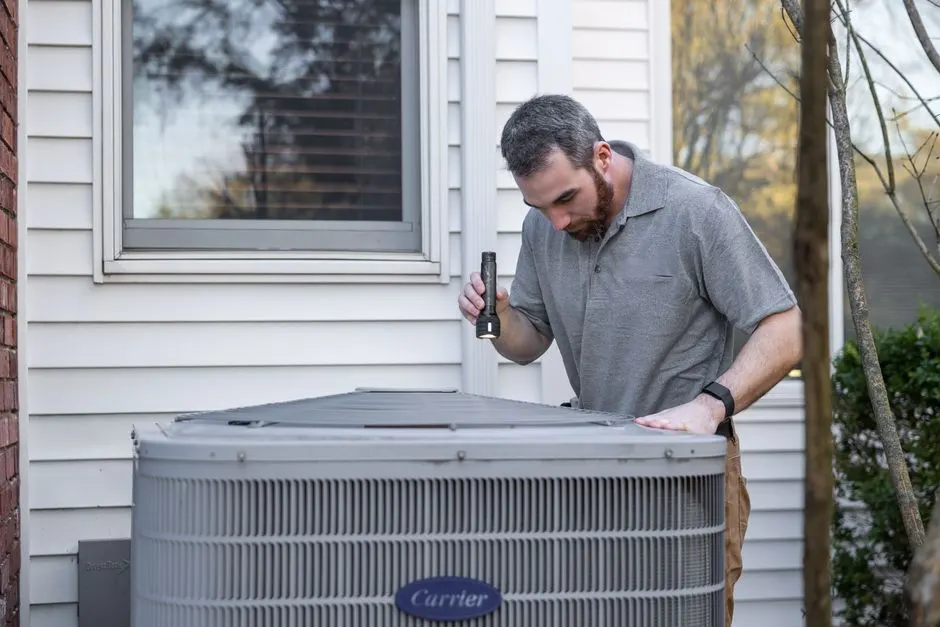
You prevent mold in a Dallas HVAC system by keeping the air handler dry, the drain pan flowing, the indoor humidity between 45 and 55 percent, and the system running long enough each cycle to actually pull moisture out of the air. That is the whole game. Everything else - filters, coils, ductwork, thermostat settings - is a supporting detail for those four things.
Dallas makes this harder than almost anywhere else in Texas. Our average summer dew point sits in the low 70s, and from May through September your AC is fighting a house full of Gulf moisture every single hour it runs. Here is the exact checklist our technicians use on DFW systems, what it costs in 2026, and the mistakes that turn a healthy unit into a mold colony in under three weeks.
Why Dallas HVAC systems grow mold so easily
Dallas HVAC systems grow mold because the air handler is the only place in your house that is simultaneously wet, dark, and 70 to 80 degrees for months at a time. Mold needs three things: moisture, organic dust, and a surface to sit on. Your evaporator coil and drain pan supply all three.
Every time the AC runs, the coil condenses gallons of water out of the air. A typical 3-ton system in a Dallas summer pulls 15 to 25 gallons of water per day out of your indoor air. That water is supposed to run down the coil, into the pan, and out the condensate drain line. When any part of that path clogs or slopes the wrong way, water sits. Standing water plus dust plus warm air equals mold in 24 to 72 hours.
Older homes make it worse. In neighborhoods like East Dallas, where a lot of the housing stock dates to the 1940s through 1960s, we routinely find air handlers in closets with no pan overflow switch, undersized return ducts, and condensate lines that drain into a crawl space instead of outside. Those setups grow mold every summer like clockwork.
How do I prevent mold in my Dallas HVAC system?
You prevent mold in your Dallas HVAC system by controlling four variables: moisture removal, airflow, drainage, and filtration. Miss any one of them and the other three stop mattering.
Here is the short version before we get into the details:
- Moisture: keep indoor relative humidity between 45 and 55 percent year-round.
- Airflow: change filters every 30 to 60 days, and never run a system with a return that is undersized for the tonnage.
- Drainage: flush the condensate line every 60 days, and confirm the pan slopes toward the drain.
- Filtration: use MERV 8 to MERV 11 filters - not MERV 13+ unless your blower is rated for the static pressure.
If you do those four things, you will not have mold in the air handler. If you skip one, you will. That is how predictable this is.
Keep indoor humidity between 45 and 55 percent
Indoor relative humidity above 60 percent is the single biggest mold risk factor in a Dallas home, and it is also the one most homeowners never measure. Buy a $15 digital hygrometer and put it in the hallway near the thermostat. Check it in the morning and again at 4 p.m. If it reads above 58 percent on a regular basis, you have a problem even if you cannot see it yet.
Your AC is your primary dehumidifier, but it only dehumidifies while it is running. A system that is oversized for the house will short-cycle - it cools the air to the setpoint in 8 minutes, shuts off, and never runs long enough to wring the moisture out of the air. That is why a 4-ton unit on a 1,800-square-foot Dallas house often produces a more humid house than a correctly sized 3-ton unit. If your system runs in short bursts and your house feels clammy at 74 degrees, that is the tell.
For homes that stay above 55 percent even with a correctly sized system, a whole-house dehumidifier tied into the return plenum is the fix. We install them regularly in Preston Hollow and other older, well-shaded neighborhoods where the AC simply cannot keep up with infiltration. Expect $1,400 to $2,600 installed in 2026 depending on capacity.
What temperature prevents mold in Dallas HVAC?
Setting your thermostat to 74 to 78 degrees Fahrenheit in summer and 68 to 72 in winter keeps the air handler above the dew point of the surrounding space and stops condensation on ductwork and interior surfaces. Mold does not care about the thermostat number itself - it cares about whether the surfaces around your HVAC equipment stay wet.
The real risk is turning the system off. Dallas homeowners who leave for a two-week vacation in July and shut the AC down come home to a house at 92 degrees and 78 percent humidity. Every cold surface in the house - toilet tanks, ductwork, interior walls - sweats. That is a mold event, and we get those calls every August.
If you are leaving town, set the thermostat to 80 degrees and leave the fan in AUTO. Do not switch it to OFF. The 8 to 12 dollars a day you save is not worth a $4,000 remediation.
Dallas HVAC mold prevention checklist
This is the exact list we walk through on every Dallas HVAC mold prevention visit. Print it, tape it to the air handler door, and work it once a month from May through October.
- Change the filter. Every 30 days in summer, every 60 in winter. Write the date on the filter frame with a Sharpie.
- Check the drain pan. It should be dry within 30 minutes of the AC shutting off. If it holds water, the pan is not sloping to the drain.
- Flush the condensate line. Pour a cup of white vinegar down the access tee, then follow with a quart of water. Do this every 60 days.
- Inspect the coil. Shine a flashlight at the evaporator coil. If you see gray fuzz or dark speckling on the fins, that is biological growth and it needs to be cleaned.
- Check the pan overflow switch. It should be wired and tested. If your unit does not have one, add it - they cost $40 to $90 installed.
- Look at the return plenum. Any visible moisture, rust streaks, or musty smell means air is leaking in from a humid attic or crawl space.
- Run the fan in AUTO, not ON. Continuous fan mode blows humid air back across a wet coil and re-wets the whole system.
- Seal the air handler closet. If the closet has a louvered door that opens into a hot garage or attic, that is a moisture path.
If you find mold already growing on the coil, the pan, or the interior of the cabinet, do not spray it with bleach and call it done. Bleach kills the surface and leaves the food source behind. That is a job for HVAC Mold Remediation Dallas TX, which includes coil cleaning, cabinet wipe-down, and an antimicrobial treatment on the wet surfaces.
How often should you clean your HVAC in Dallas TX?
Clean your HVAC system every 6 months in Dallas, with a full coil and drain pan cleaning once a year. Ductwork should be inspected every 12 to 18 months and cleaned only when there is visible debris or biological growth inside the runs.
Here is the schedule we recommend for DFW homes:
- Monthly (May-October): filter change, drain pan check.
- Every 60 days: condensate line flush.
- Every 6 months: coil inspection, blower wheel check, cabinet inspection.
- Annually: full coil cleaning, drain pan scrub, condensate trap replacement if cracked.
- Every 12-18 months: duct inspection with a camera. Clean only if needed.
Homes with pets, or homes within a mile of White Rock Lake, need the filter changed closer to every 21 days in summer. We see heavier biological load on coils in White Rock and Lakewood than almost anywhere else in the city, mostly because of pollen and lake humidity.
What Dallas HVAC mold prevention costs in 2026
Dallas HVAC mold prevention costs $180 to $450 per year for a homeowner who stays on top of filters and drain maintenance, or $600 to $1,200 if you hire out the annual coil cleaning and duct inspection. Full HVAC mold remediation, if you already have growth, runs $1,200 to $3,800 depending on system size and how far the mold has spread into the ductwork.
Typical 2026 pricing in the Dallas market breaks down like this:
- Filter changes (DIY): $80 to $180 per year.
- Professional coil cleaning: $250 to $450.
- Condensate line clearing and pan treatment: $120 to $220.
- Pan overflow switch installed: $40 to $90.
- Whole-house dehumidifier installed: $1,400 to $2,600.
- Duct cleaning and sanitization: $450 to $900 for a typical 2,000-square-foot home.
- Full HVAC mold remediation: $1,200 to $3,800.
The math is simple. Spending $300 a year on prevention beats a $2,500 remediation every time. If you want a baseline before you spend anything, a Mold Inspection and Testing Dallas TX visit will tell you whether you have an active problem or just a maintenance issue.
Common mistakes that feed HVAC mold
The most common mistake Dallas homeowners make is running the fan in ON mode year-round. It feels like better air circulation, but it pushes humid air across a wet coil 24 hours a day and keeps the whole cabinet damp. Switch to AUTO.
Other mistakes we see on almost every call:
- Using MERV 13+ filters on a system not rated for them. The blower starves for air, the coil gets colder than it should, and condensation runs off the coil into the ductwork instead of the pan.
- Ignoring a slow drain. A condensate line that drains in 90 seconds instead of 30 is already partially clogged. It will back up within a month.
- Sealing the air handler closet too tight. The unit needs return air. If you block the return, the system pulls humid air from the attic through every gap in the cabinet.
- Spraying bleach on the coil. Bleach corrodes aluminum fins and does not kill mold inside the coil. It makes the next cleaning more expensive.
- Turning the system off during vacation. Covered above, but it is the number-one cause of August mold calls we get.
- Skipping the pan overflow switch. A $60 part that prevents a $6,000 ceiling repair. There is no reason not to have one.
If you have already found growth on drywall or ceiling tiles around the air handler, that is a different scope. Drywall Mold Removal and Repair Dallas TX handles the cut-out, treatment, and patch so the HVAC work does not get undone by contaminated drywall next to it.
When to call a professional
Call a professional when you can smell the musty odor but cannot see the source, when the coil has visible growth, or when the same drain line has clogged twice in one cooling season. Those three situations almost always mean the problem is inside the cabinet or the ductwork, not at the filter.
Our team at Dallas Mold Remediation handles the full scope - inspection, coil and cabinet cleaning, antimicrobial treatment, and duct sanitization - so you are not coordinating three different contractors. We also handle the underlying moisture source, because cleaning mold off a coil that is still condensing water is a waste of money.
If you are not sure whether you have a problem, start with a visual inspection of the coil and pan. If you see gray fuzz, dark speckling, or standing water, stop there and get it looked at. If everything is dry and clean, keep doing what you are doing.
Frequently Asked Questions
How do I prevent mold in my Dallas HVAC system?
Keep indoor humidity between 45 and 55 percent, change filters every 30 to 60 days, flush the condensate line every 60 days, and run the fan in AUTO. Those four habits prevent the vast majority of HVAC mold growth in Dallas homes.
How often should I clean my HVAC in Dallas TX?
Inspect the coil and drain pan every 6 months, do a full coil cleaning once a year, and change filters every 30 days from May through October. Ductwork should be inspected every 12 to 18 months and cleaned only if debris or growth is present.
Does Dallas humidity cause HVAC mold?
Yes. Dallas summer dew points sit in the low 70s, and a 3-ton system pulls 15 to 25 gallons of water per day out of your air. Any standing water in the pan or cabinet will grow mold within 24 to 72 hours.
What temperature prevents mold in Dallas HVAC?
Set the thermostat to 74 to 78 degrees in summer and 68 to 72 in winter. Never shut the system off during a summer vacation - set it to 80 and leave the fan on AUTO instead.
How much does Dallas HVAC mold prevention cost?
DIY prevention runs $80 to $180 per year in filters and vinegar. Professional annual coil cleaning and duct inspection runs $600 to $1,200. Full remediation, if mold is already present, is $1,200 to $3,800.
Get help with Mold Remediation in Dallas
If you have found growth on your coil, in your drain pan, or inside the ductwork, we can inspect it, clean it, and treat the surfaces so it does not come back next summer. Our team handles Mold Remediation Dallas TX for homes and businesses across the metroplex.
Call (214) 817 0145 to schedule an HVAC mold inspection. We will tell you what we find and what it costs before we start any work.