Preparing your Dallas home for mold season after heavy rain
Heavy rain in Dallas doesn't cause mold by itself - trapped moisture does. Here's the room-by-room prep that stops mold before it starts.
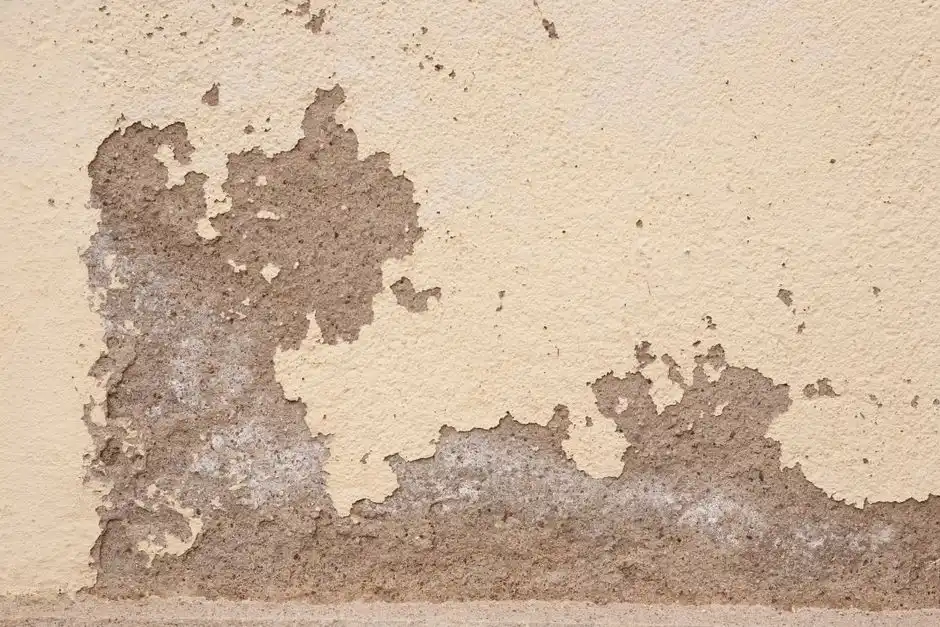
Mold season in Dallas runs from roughly May through October, and it starts about 24 to 48 hours after heavy rain leaves standing water or soaked building materials behind. Warm air, 60%+ humidity, and a wet slab or wall cavity are all mold needs to colonize - which is why the work you do in the first two days after a storm matters more than anything you do in August.
This guide covers how to prepare your Dallas home for mold season after heavy rain: which rooms to check first, what to dry and how fast, the moisture numbers that tell you whether you have a problem, and the point where DIY stops working. We do this work across Dallas every storm season, so the checklist below is the same one our technicians run.
When is mold season in Dallas, and why does it follow heavy rain?
Dallas mold season peaks in late spring and summer because the combination of 90°F-plus temperatures and high humidity gives mold ideal growing conditions, and heavy rain supplies the moisture that kicks it off. Mold spores are already in every Dallas home's air - the rain doesn't bring them in, it gives them a place to land and grow.
Two things make North Texas different from wetter climates. First, our soil is heavy black clay that swells when saturated and shrinks when it dries, which opens cracks in slabs and foundation walls and lets water wick into the lowest level of the house. Second, our homes run air conditioning almost continuously from May to September, and an AC system that's pulling 75°F air through a 95°F attic creates condensation on ductwork and inside wall cavities. That condensation is enough to feed mold even in a room that never saw a drop of rain.
The practical takeaway: post-rain mold in Dallas is usually a ventilation and drying problem, not a flooding problem. If you dry the structure within 24 to 48 hours, you rarely get growth. If you don't, you usually do.
How to prepare your Dallas home for mold season after heavy rain, room by room
Start at the bottom of the house and work up. Water travels down, and the first signs of trouble almost always show up in the lowest level or the attic - the two places Dallas homeowners check last.
Attic and roof deck
After a heavy storm, go up with a flashlight and look at the underside of the roof deck, the insulation, and the wood framing around the chimney and vents. Any dark staining, musty smell, or soft drywall on a ceiling below is a sign that water got in. Attic mold is common in Dallas because attic temperatures swing from 130°F in July to 30°F in January, and that cycling drives condensation onto the sheathing. If you find growth on the roof deck or rafters, attic mold remediation Dallas Texas is a different job than wiping down a wall - it involves treating the wood and fixing the ventilation that caused it.
Crawl space and slab edges
Homes on pier-and-beam foundations in older Dallas neighborhoods have a crawl space that holds humidity like a basement. After a wet spring, check the soil under the house - if it's damp to the touch two days after the rain stopped, you have a moisture source. Look for white or gray fuzzy growth on joists and piers. We handle this with crawl space mold remediation Dallas TX, which includes drying the space, treating the wood, and installing a vapor barrier so the next storm doesn't undo the work.
Windows, doors, and exterior walls
Wind-driven rain pushes past window flashing and door thresholds. Run your hand along the interior trim after a storm - if the drywall feels cool or the paint is bubbling, water is behind it. Dallas homes built before 1980 often have single-pane windows with original flashing that has long since failed.
HVAC system and ductwork
This is the one most homeowners miss. Your AC pulls air from every room, and if that air is humid, the evaporator coil and drain pan stay wet. Mold grows on the coil, then gets blown through the house every time the system runs. If you smell a musty odor when the AC kicks on, that's the sign. HVAC mold remediation Dallas TX addresses the coil, the drain pan, and the ducts together, because cleaning one without the others just recontaminates the system.
The Dallas home mold season checklist
Run this list within 48 hours of any storm that drops more than an inch of rain or leaves water anywhere it shouldn't be. It takes about an hour and prevents most of the calls we get in June and July.
- Check the lowest level first. Basement, crawl space, garage slab, and the bottom of closets on exterior walls.
- Measure moisture, don't guess. A $20 pin-type moisture meter should read under 15% on drywall and under 12% on wood framing. Anything above 20% needs active drying.
- Run the AC, not the fans, to dry the air. Your air conditioner dehumidifies as it cools. Box fans move air but don't remove water.
- Keep indoor humidity under 55%. A $15 hygrometer tells you where you stand. In Dallas summer, that usually means running the AC and a standalone dehumidifier in the lowest level.
- Clear gutters and extend downspouts 6 feet from the foundation. Water that dumps at the slab edge finds its way in through the clay soil cracks.
- Check the attic after every major storm. Look at the roof deck, insulation, and any ceiling stains below.
- Pull furniture and boxes 2 inches off exterior walls. Air can't dry what it can't reach.
- Photograph anything wet. If you end up filing an insurance claim, dated photos of the water source and affected materials speed up the process.
If you want a second set of eyes on a house you're not sure about, mold testing Dallas Texas gives you lab results on what's actually growing and where, rather than a visual guess.
What to do in the first 24 hours after a Dallas storm soaks your house
The first 24 hours after water intrusion decide whether you're looking at a drying job or a remediation job. Mold can begin colonizing wet drywall in as little as 24 to 48 hours, and porous materials like sheetrock and carpet padding can't be saved once growth starts.
Here's the order of operations:
- Stop the water source. Fix the leak, clear the drain, or shut off the supply before you do anything else.
- Get air moving and dehumidifying. Aim for 55% relative humidity or lower in the affected area. Rentals run about $50 to $80 a day in Dallas for a commercial dehumidifier and air mover.
- Pull up wet carpet and pad. Pad almost never dries fast enough - plan on replacing it.
- Cut out drywall that's wet above the water line by 12 inches. Drywall wicks water upward, so the visible stain is always smaller than the wet area.
- Document everything before you throw it out. Photos, measurements, and a written list of damaged materials.
If the water came from a flooded room, a backed-up drain, or a roof leak that soaked more than about 10 square feet, call a professional the same day. Dallas flood mold prevention is a timing game, and the difference between a $600 drying bill and a $6,000 remediation bill is usually measured in hours.
What to watch out for: common mistakes that make Dallas mold worse
The mistakes we see most often in Dallas homes all come down to treating the symptom instead of the moisture source.
- Painting over mold. Kilz and mold-resistant paint hide the stain but don't kill the colony. The mold grows through the paint within a few months.
- Bleaching porous surfaces. Bleach kills surface mold on tile and glass. On drywall, wood, and grout, it doesn't penetrate far enough, and the water in the bleach feeds what's left.
- Running fans without dehumidifying. Fans spread spores through the house and dry the surface while the wall cavity stays wet.
- Ignoring the HVAC. If mold is in the ducts or on the coil, every room in the house gets a fresh dose every time the system runs.
- Assuming the smell will go away. A musty odor that lingers more than three days after the rain stops means there's an active moisture source you haven't found.
- Skipping the attic and crawl space. These are the two most common hidden locations for mold in Dallas homes, and the two most often missed.
If you're dealing with visible black growth rather than a light surface film, that's a different problem. Black mold removal Dallas TX requires containment and HEPA filtration because disturbing stachybotrys without containment spreads spores through the whole house.
When to call a professional
Call a professional when the affected area is larger than 10 square feet, when the water came from a sewage backup or flood, when you can smell mold but can't see it, or when the moisture has been sitting for more than 48 hours. Those four conditions cover about 90% of the jobs we run.
Our team at Dallas Mold Remediation handles the whole sequence: we find the moisture source, contain the affected area, remove and dispose of contaminated materials, treat the framing and surfaces, and verify with moisture readings and, when needed, post-remediation air sampling. We work in occupied homes every week, and we keep the disruption to the affected rooms.
If you're in an older neighborhood with pier-and-beam construction, the calculus changes. Homes in East Dallas mold remediation TX territory - much of it built between 1920 and 1955 - have crawl spaces and original plumbing that leak slowly for months before anyone notices. Slow leaks are worse than fast ones because the moisture has time to spread through framing and insulation.
Frequently Asked Questions
When is mold season in Dallas TX?
Mold season in Dallas runs from May through October, peaking in June through September when temperatures stay above 85°F and humidity stays above 60%. Growth can start within 24 to 48 hours of water intrusion, so the risk window opens the day after a heavy rain, not weeks later.
How do I prevent mold after heavy rain in Dallas?
Dry the structure within 24 to 48 hours. Keep indoor humidity under 55%, run the AC to dehumidify, pull wet carpet and pad, and cut out wet drywall 12 inches above the water line. Check the attic and crawl space after every storm - those are the two most common hidden locations.
Does heavy rain cause mold in Dallas homes?
Heavy rain doesn't cause mold directly - it creates the moisture that lets existing spores colonize. A Dallas home that dries within 48 hours rarely grows mold. One that stays wet for a week almost always does, especially in wall cavities, attics, and crawl spaces where air doesn't circulate.
What should I do if my Dallas home floods and mold grows?
Stop the water source, document the damage with photos, and call a remediation company the same day. Don't bleach porous materials or paint over growth. If the flooded area is larger than 10 square feet or involved sewage, professional containment and removal is the only safe option.
How much does mold remediation cost in Dallas?
Typical 2026 pricing in Dallas runs $1,200 to $3,500 for a single affected room, and $4,000 to $10,000 or more for whole-house remediation involving attic, crawl space, or HVAC systems. Testing and post-remediation verification add $300 to $700.
Get help with Mold Remediation in Dallas
If you've had water sitting in your Dallas home for more than two days, or you can smell mold but can't find it, the fastest way to stop the damage is to get a technician on site. We handle inspection, remediation, and verification in one visit, and we'll tell you straight whether you're looking at a drying job or a full remediation.
Call Dallas Mold Remediation at (214) 817 0145 to schedule an inspection. We serve homes and businesses across Dallas, from Downtown Dallas mold remediation TX high-rises to single-family homes in Preston Hollow and Oak Cliff.